
What to Expect in Your First Therapy Session in Flagstaff, AZ
You've been thinking about it for a while. Maybe weeks. Maybe months. Maybe years.
Something isn't right, and you know it. But the idea of sitting in a room with a stranger and talking about it feels like a lot. You don't know what you'd even say. You're not sure if your problems are "bad enough" to justify therapy. And you have no idea what actually happens when you walk through the door.
If any of that resonates, you're in good company. Most of the clients I work with in Flagstaff tell me they felt the same way before their first session. The uncertainty is often harder than the session itself.
Here's what the process actually looks like, from start to finish, so you can walk in knowing what to expect.
Step 1: Reach Out
The first step is simple. Call, email, or fill out the contact form. Tell me a little about what's bringing you to therapy. You don't have to have it all figured out. "I've been feeling off and I don't know why" is a perfectly fine place to start.
I'll share a bit about how I work, and we'll both get a sense of whether it feels like a good fit. Not every therapist is right for every person, and that's okay. The goal is to make sure you feel comfortable before we begin.
If it feels right, we schedule your first session. If not, no pressure. I'm happy to help point you toward someone who might be a better match.
Step 2: Before Your First Session
Once your session is booked, I'll send you some intake paperwork. This includes basic information about you, your history, and what you're hoping to work on.
If you're using insurance, we'll verify your coverage before your first appointment so there are no surprises. I accept BCBS, Aetna, Humana, United, UMR, and Medicare.
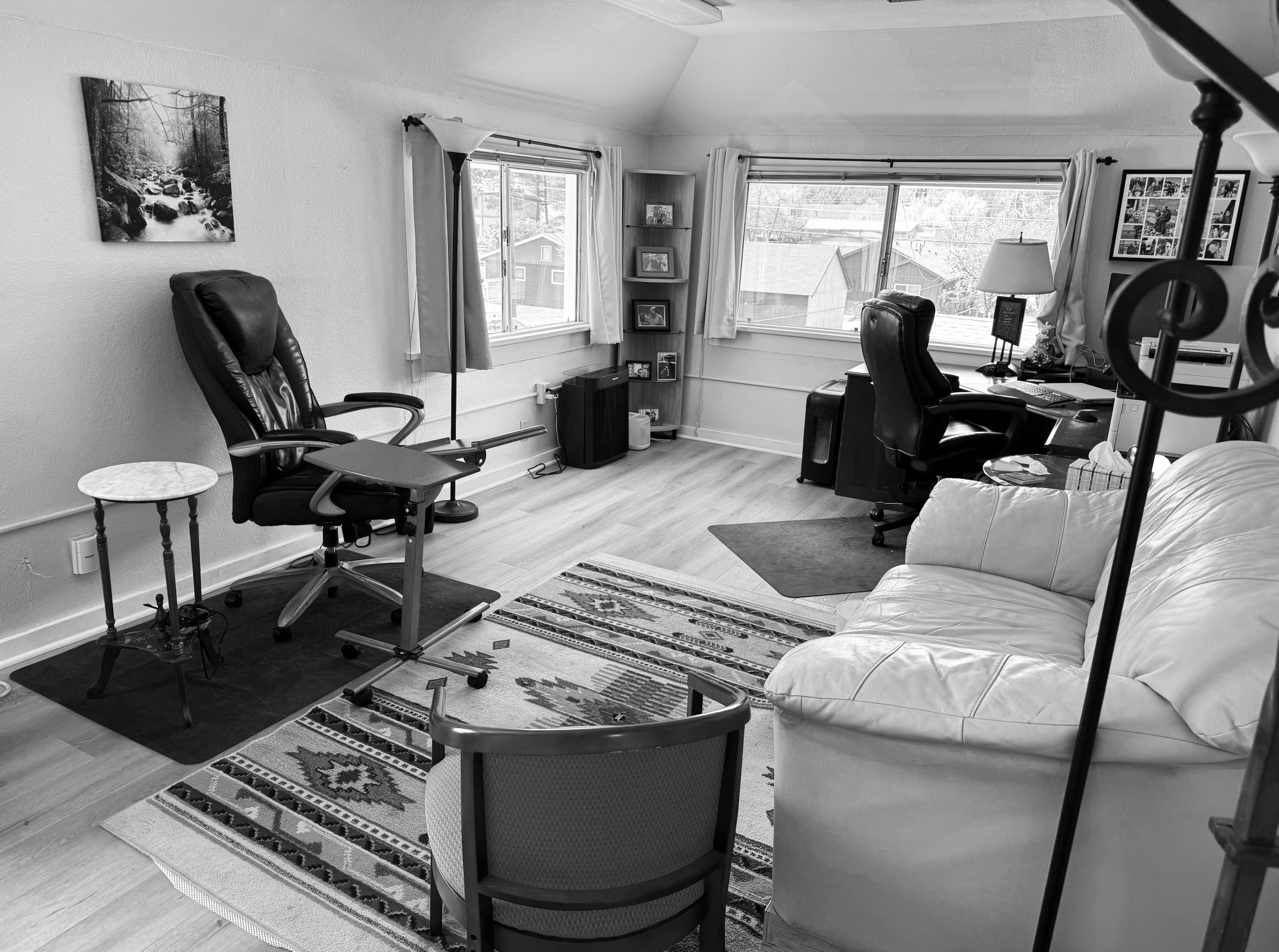
Sessions are available in person at my office in Flagstaff or online via a secure video platform if you're anywhere in Arizona. You choose whichever feels more comfortable.
Step 3: What Happens in the First Session
Your first session is about getting to know each other. That's it.
I'll ask you about what's been going on, what's bringing you to therapy now, and what you're hoping to get out of it. We'll talk about your background, not to dig into every detail of your past right away, but to understand the bigger picture of your life and what might be contributing to how you're feeling.
Here's what the first session is NOT:
It's not an interrogation. You share what you're comfortable sharing. There's no pressure to go deep on day one.
It's not a test. There are no right or wrong answers. You don't need to be articulate about your feelings. Most people aren't, especially at first.
It's not a commitment to years of therapy. We'll talk about what a realistic path might look like based on your goals. Some people come for a few sessions. Others stay longer. You're in control of that.
By the end of the first session, most people tell me they feel relieved. Not because everything is solved, but because they finally said some things out loud that they've been carrying in silence.

What I'm Looking For (and It's Not What You Think)
While you're talking, I'm not judging you. I'm not diagnosing you in my head. I'm not thinking about how to "fix" you.
What I'm actually doing is listening for patterns. How do you talk about yourself? What emotions come up and which ones do you avoid? Where do you get stuck? What's been tried before and what hasn't worked?
These patterns help me understand what approach might be most helpful for you. For some people, that's EMDR, especially if past experiences are still affecting how they feel and react today. For others, it might be Internal Family Systems, mindfulness-based work, or Cognitive Behavioral Therapy. Sometimes it's a combination.
I won't throw a bunch of clinical terms at you. I'll explain what I'm suggesting in plain language and why I think it might help. And if something doesn't resonate, we adjust.
Many of my clients benefit from EMDR therapy, which helps the brain process experiences that talk therapy alone often can't reach.
Common Worries (and Why They're Normal)
"My problems aren't serious enough for therapy." There is no minimum threshold of suffering required to seek support. If something is bothering you enough that you're reading this article, that's enough.
"What if I cry?" You might. That's completely fine. Tears are a normal part of processing. I keep tissues in the office for a reason.
"What if I don't know what to say?" You don't have to come prepared with a speech. I'll guide the conversation. Some of the most productive sessions start with "I don't even know where to begin."
"What if I don't like my therapist?" That happens, and it's not a failure. The relationship between you and your therapist matters more than any technique or credential. That's why we start with a free consult, to check the fit before you invest your time and energy.
"Will you tell me what's wrong with me?" No. My job isn't to label you. It's to help you understand yourself better. Whatever you're experiencing makes sense in the context of your life. We figure out that context together.
If you're coming in because of anxiety or stress that won't let up, you're not alone. It's one of the most common reasons people start therapy.
If past experiences are still affecting how you feel today, we'll talk about what approach might help you process them.
I also work with couples who feel stuck or disconnected. If that's what brought you here, your first session will look a little different, but the goal is the same: understanding what's happening and building a path forward.
What Happens After the First Session
At the end of our first meeting, we'll talk about next steps. That might include:
Scheduling a follow-up session (most clients start with weekly sessions)
Setting some initial goals for what you'd like to work on
Deciding together which therapeutic approach makes the most sense
There's no lock-in. No contract. If after the first session you decide therapy isn't for you right now, that's completely okay. But most people leave feeling lighter than when they walked in, and curious about what comes next.
You've Already Done the Hardest Part
If you're reading this, you're already considering therapy. That takes more courage than most people realize. You don't need to have it all figured out. You don't need to wait until things get worse. You just need to take one small step.
Reaching out is the easiest way to start. No commitment. No pressure. Just a conversation to see if it feels right.
I offer in-person therapy at my office in Flagstaff and online sessions throughout Arizona.

