How to Manage Stress and Anxiety in Daily Life (and When to Seek Help)

Anxiety doesn't always look like a panic attack.
Sometimes it looks like lying awake at 2 a.m. running through tomorrow's problems. Sometimes it's snapping at your partner over something small because your nervous system has been running on high all day. Sometimes it's that low hum of tension in your chest that never fully goes away, even when nothing is technically wrong.
If that sounds like your daily life, you're not imagining it. And it doesn't have to stay that way.
As a therapist in Flagstaff, AZ, I work with adults who have been carrying stress and anxiety for so long that it's started to feel normal. It's not. Below are some of the tools I share with clients, along with guidance on when self-help isn't enough and professional support might be the right next step.
1. Pause Before You React
When anxiety is running the show, you move fast. You react to emails instantly. You say yes to things you don't have capacity for. You jump to worst-case scenarios before the situation has even played out.
One of the simplest and most effective shifts you can make is to build small pauses into your day.
Before responding to something that feels charged, whether it's a difficult text, a stressful email, or a tense conversation, give yourself 10 seconds. That's it. Ten seconds of breathing before you respond.
This isn't about suppressing your reaction. It's about creating just enough space to choose your response instead of being hijacked by it. Over time, those small pauses rewire how your nervous system handles stress.
2. Stop Treating Busyness Like a Measure of Worth
Many of my clients in Flagstaff describe their days as an endless series of tasks. One thing after the next, from morning to night, with no real pause in between. When I ask them how they feel about it, they usually say exhausted. When I ask why they keep doing it, they often can't answer.
There's a concept called "human doing" versus human being. If your sense of self-worth is tied to how productive you are, rest will always feel like failure. And your anxiety will keep climbing because there is always more to do.
Try this: once a day, for just five minutes, sit somewhere quiet and do nothing. No phone. No task. No agenda. Just breathe. Notice what comes up. If sitting still makes you uncomfortable, that's worth paying attention to. It often points to something deeper that therapy can help with.
3. Move Your Body, But Not to Punish It
Exercise is one of the most effective natural tools for managing anxiety. But there's a difference between moving your body to release tension and punishing your body to outrun it.
A 20-minute walk outside does more for your nervous system than an hour of high-intensity exercise fueled by cortisol. Nature is especially effective. If you're in Flagstaff, you have some of the best access to trails, open space, and clean air anywhere in Arizona. Use it.
The goal isn't to exhaust yourself into calm. The goal is to help your body discharge the stress it's been holding so your mind can settle.
4. Watch Your Inputs
Anxiety doesn't just come from within. It's fed by what you take in.
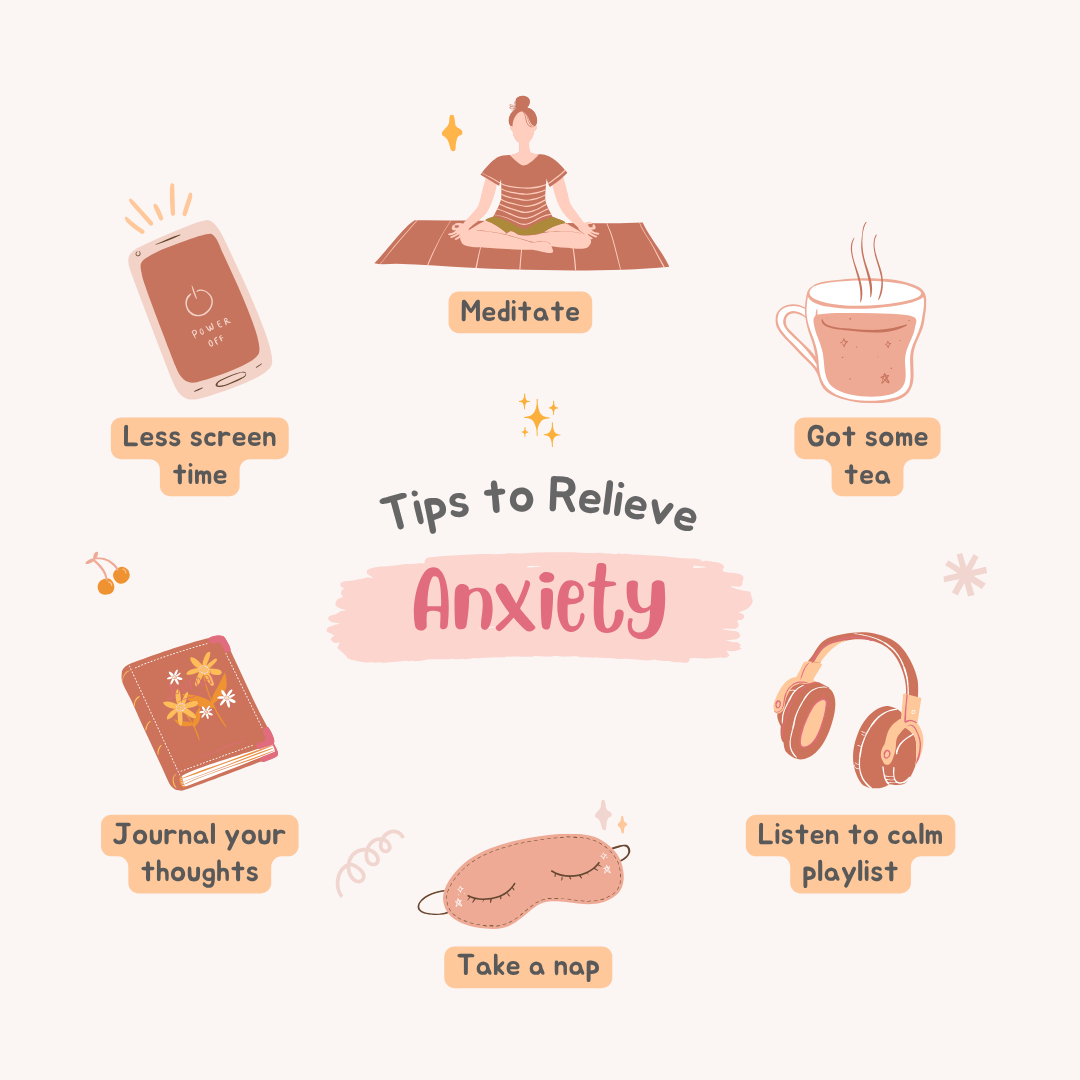
If you scroll through your phone first thing in the morning, you're handing your nervous system over to whatever the algorithm decides to show you. If you watch the news for two hours before bed, your brain is processing threat signals while you're trying to sleep.
This isn't about ignoring the world. It's about being intentional with what you consume and when. A few changes that clients tell me make a noticeable difference:
No phone for the first 30 minutes after waking
Limiting news consumption to one specific time of day
Turning off non-essential notifications
Replacing social media scrolling before bed with reading or music
These adjustments don't eliminate anxiety. But they stop feeding it.
5. Name What You're Feeling
Anxiety thrives in vagueness. When you feel a knot in your stomach or a tightness in your chest, the instinct is to push through it or distract yourself from it. But research consistently shows that simply naming your emotion reduces its intensity.
This is called affect labeling. Instead of "I feel awful," try to get specific. "I feel anxious about the meeting tomorrow." "I feel overwhelmed because I have too many commitments this week." "I feel scared that things won't work out."
Naming the feeling doesn't make it disappear. But it moves the experience from your body's alarm system into the part of your brain that can actually process it. Over time, this practice builds emotional awareness, which is one of the foundations of therapy.
This concept, known as affect labeling, has been studied extensively. Research published in Psychological Science found that putting feelings into words reduces the intensity of the emotional response.
6. Know the Difference Between Stress and an Anxiety Disorder
Stress is a normal response to difficult circumstances. It comes and goes. When the stressor is removed, the stress usually fades.
Anxiety is different. It persists even when there's no clear threat. It shows up as constant worry, difficulty sleeping, irritability, muscle tension, racing thoughts, or a feeling of dread that doesn't match your actual situation. If anxiety has been affecting your daily life, your relationships, or your ability to function for more than a few weeks, that's a signal that something deeper is going on.
This is where self-help reaches its limit and professional support becomes important.
When to Consider Therapy for Anxiety
The tools above are genuinely helpful. But if anxiety has been part of your life for months or years, tools alone may not be enough. That's because chronic anxiety often has roots in past experiences, unresolved stress, or patterns that developed long before you were aware of them.
In my work as an anxiety therapist in Flagstaff, I use EMDR (Eye Movement Desensitization and Reprocessing) alongside other approaches to help clients get to what's underneath the anxiety, not just manage the symptoms on the surface. EMDR is especially effective when anxiety is connected to past experiences that your nervous system hasn't fully processed.
Many clients tell me they spent years trying to think their way out of anxiety. Therapy, especially trauma-informed therapy, works at a different level. It helps your brain and body process what thinking alone can't reach.
You Don't Have to Figure This Out Alone
If anxiety has become a constant companion, you deserve support that goes deeper than tips and techniques. Reaching out is a simple first step to see if therapy might help.
I offer in-person sessions at my office in Flagstaff and online therapy throughout Arizona. I accept BCBS, Aetna, Humana, United, UMR, and Medicare. A sliding scale is available. You tell me what you can afford.